Night Running & Head Torch Advice
I used to be afraid of the dark and it took a mountain to make me realise it.
Like many young children I was afraid of the dark and for years slept with a night light on. Eventually I lost the need for a nightlight and became conformable sleeping in the dark.
But I was still afraid of the dark, I just didn’t know it.
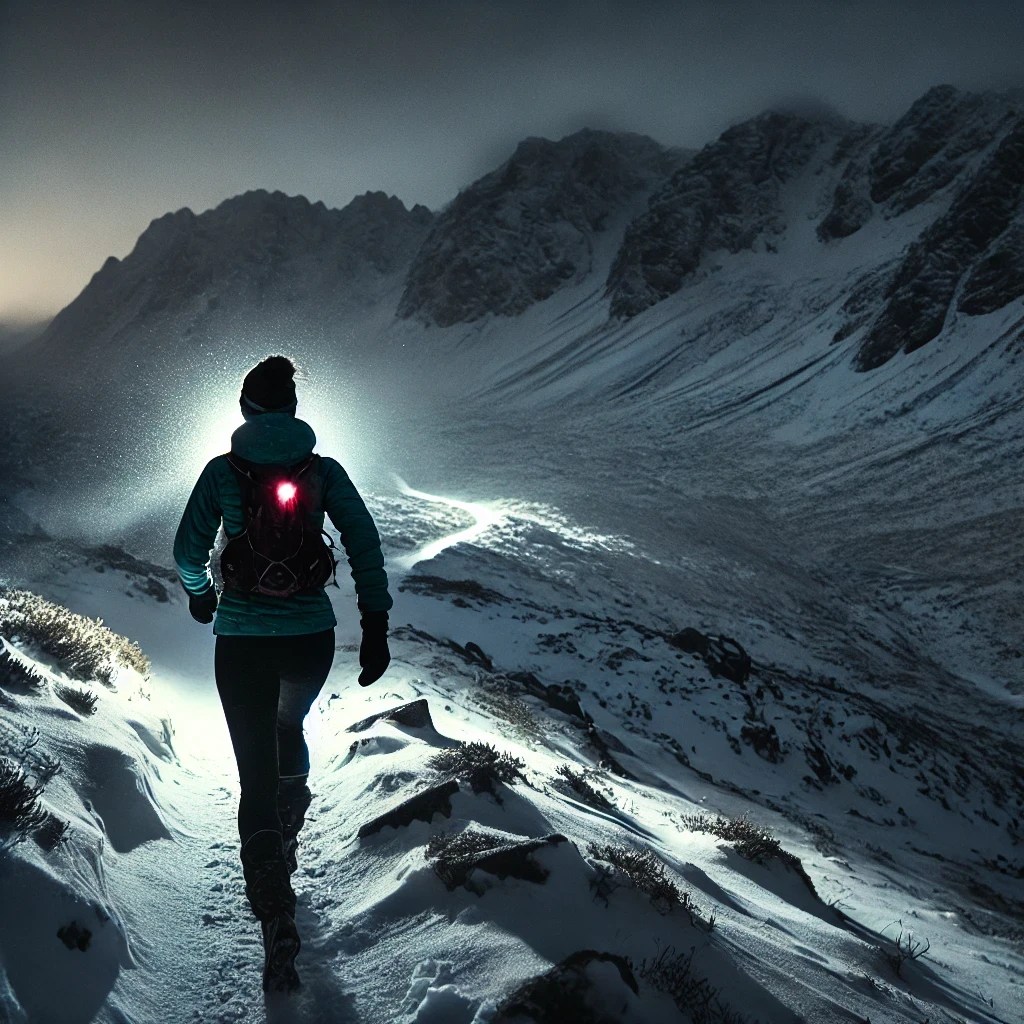
In the Scottish Highlands in winter we lose daylight hours dramatically, falling to around 6-7 hours. Add in a winter storm and on some days it can feel like the sun has hardly risen. It’s why Seasonal Affective Disorder (SAD) is not uncommon, thankfully the NHS recommend exercise to help with the condition.
With 16 hours of darkness to contend with it’s highly likely we are going to be running in the dark at some point, as I found out.
I’d run at night plenty of times in cities and never had any issues. I’d take a head torch and rarely need it thanks to light pollution. Using a torch was about being seen as much as it was for navigating hazards. So I only found out that I was an adult in my 30s still afraid of the dark on a solo mountain run in the autumn several years ago.
That’s a slightly ridiculous and embarrassing statement to make. I strive toward rationality and know on an intellectual level there’s nothing inherently scary about the absence of light. There are no monsters.
And yet, as the sunlight drained away on this over cast autumnal day I put my head torch. I became aware of the sharp darkness than started imeditly outside of my head torch’s small puddle of light.
It was cloudy, there was no moon and I was along way from any light, apart from my weak head torch keeping me buoyant on a wavy sea of hillside darkness.
I started to pick up my pace and started to worry. What if my head torch ran out of battery? What if I was consumed by the darkness? What was behind me? What if I got lost? What if there was something out there?
I ran on. Faster and faster.
Uncomfortably fast now. Half pretending I was pushing the pace for fun, rather than acknowledging the truth, I was running as fast as I could because I was terrified. My heart was pounding and I was having to force my body to keep going. The idea of slowing down filled me with more fear and I pushed on.
I arrived back at the lay-by where my car was parked, drenched in sweat, adrenaline levels cashing. I got in the car, tuned the key in the ignition, locked the door and breathed out a sigh of relief as the car headlamps came on. I was safe.
Driving home I reflected on what had happened and decided I needed to get over this if I was to be able to do some of the adventures I dreamed of.
Over the next couple of years I set about working on getting over my fear of the dark. It took some effort but I’m pleased to say, I’m now totally at ease in the dark.
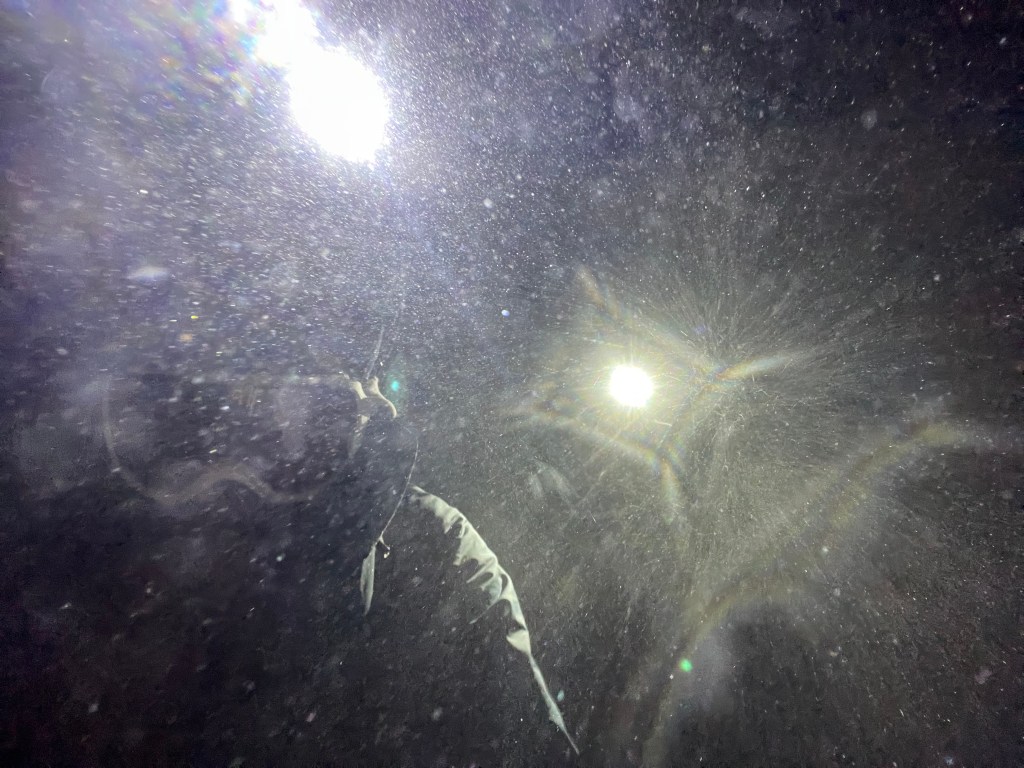
Part of the summer and Winter Mountain Leader qualifications requires being able to navigate in poor visibility and this inevitably means being able to navigate at night. I surprisingly ended up really enjoying this element of the qualification as it forced me to go out and practice night navigation. One of the most memorable adventures I had last winter was a solo traverse of part of the Fannichs on a very dark and wintery night. There are cliff edges which you need to get close to if you want to summit the Munro’s so it was a real test of both my ability to navigate and my general confidence in operating in a winter night time environment.
Advice
Choosing the right head torch to suit the intended context can make a large difference on how enjoyable a night time outing can be.
I don’t use the same torch for city runs as I do for winter mountain adventures. The scenarios dictate different criteria.
A night run in a city probably only requires a couple of hundred lumen. You might want to run faster and carry less weight. The consequence if you run out of battery probably isn’t life threatening.
In contrast, a winter mountain adventure requires as many lumens as you can afford. You need to cary backup systems as losing the ability to see could mean you can’t navigate, which means you can’t move, which means you risk succumbing to hypothermia.
In the depths of winter on a mountain run I take a tank of a head torch with a spare battery. The more lumen the better but note, not all lumen are equal (even though they should be). I’m looking for a basic mode setting, something like on low/on bright/emergency flash/off. In my experience head torches with fancy settings and features don’t work very well and get annoying. I must be able to turn the torch on and off whilst wearing gloves.
I really rate the Moonlight 2000, which has all of my desired features. Crucially the light coverage is amazing and the unit is very robust. The ability to cover your environment in a bath of light makes spotting features and hazards so much easier. It allows you to make navigational decisions earlier and helps when travelling at speed (running, skiing etc). They are not cheap.
Depending on what I’m doing and whom I’m with I might also have a second spare torch. That would do the job of lighting me off a hill if required (something like a Alpkit Qark).
I always carry an emergency torch (Petzl e+LITE), it premaritally lives in my bag. It’s in a waterproof, impact resistant container. I wouldn’t want to have to use it to get off a hill but it’s nice to know it’s there and would make anyones job searching for me a lot easier.
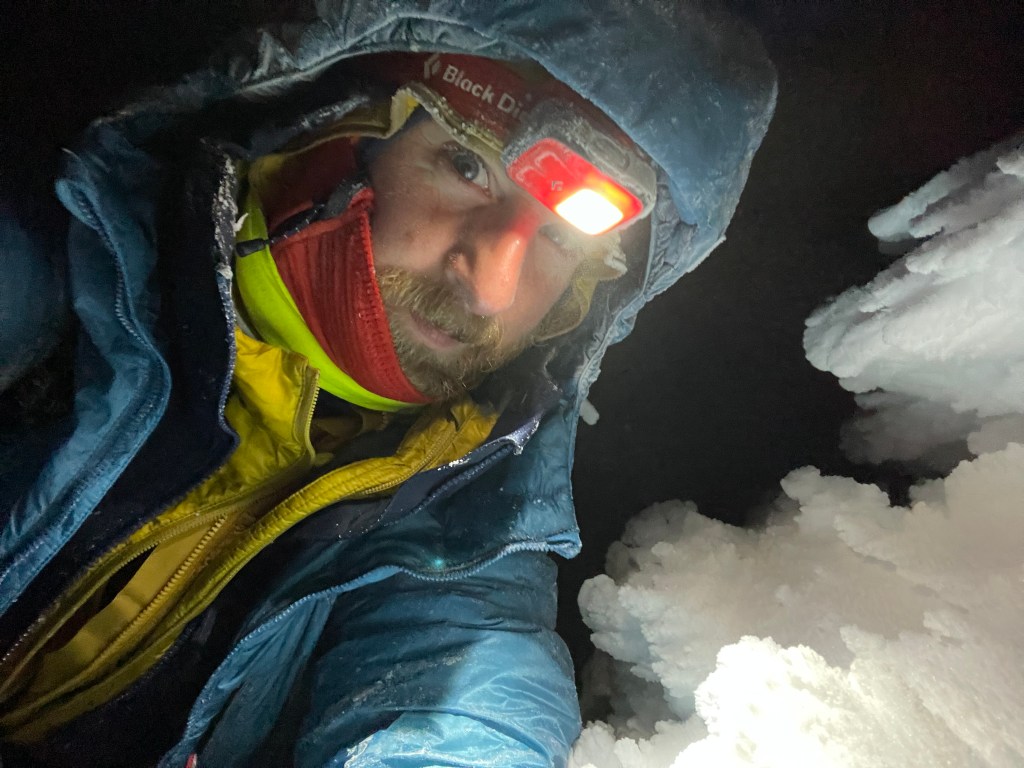
I now feel incredibly smug when I’m out in the mountains and night closes in, I pop on my head torch and enjoy the darkness. It’s nice to reflect on how I’ve managed to grow confidence and enjoy something I used to be scared of.
Getting over fear takes time and consideration but I’ve found the things I’ve been afraid of and confronted have become some of my most cherished things. I was afraid of going up mountains once.
 WinterSkills.Scot