To move swiftly and securely over steep hard snow and ice requires increasing friction with the ice. Typically that comes in the form of some kind of metal spike attached to our feet.
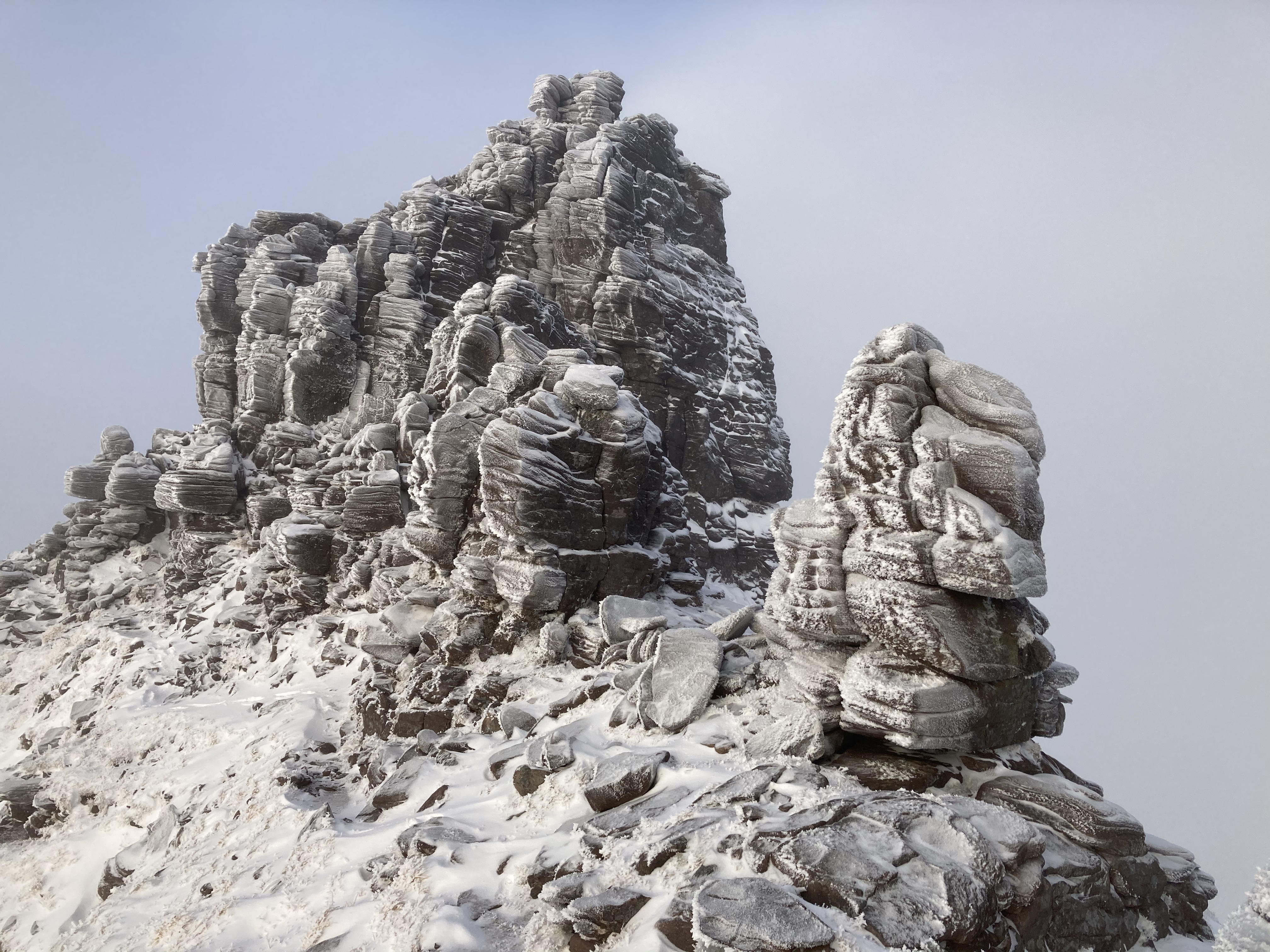
From low down at the start of the day it’s difficult to know if there’ll be hard snow or ice on top of a Munro.
Metal spikes add weight to our pack and will have an effect on our running speed.
So what to take?
Mircospikes are great.
They are small, light, fit on any footwear and can really help on icy trail runs. Worth owning a set even if you don’t aspire to going into high cold places but want to enjoy winter trail running.
There are few brands making microspike type options. Personally I wouldn’t trust an AliExpress type purchase for this kind of safety equipment. In theory the metal might be cheap and not strong enough to function in the cold and under the loads.
At the moment the “PEDROC MOUNTAIN SPIKE CRAMPON” by Salewa looks pretty nifty.
Unfortunately they are often not up to the job of keeping your feet attached to the ground on a mountain in full winter conditions.
On hard or steep ice they just won’t bite enough. I’ve experimented a lot with them, and have managed some of the classic Scottish ridges in mircospikes but I’ve been very choosey about conditions.
A much better option are crampons.
Crampons are great
Crampons where invented by hill side farmers in the Alps so they could walk up steep grassy fields in the summer and get on with their day. When someone worked out they could be used in winter climbing it was a revolutionary moment. It allowed much swifter travel on steep terrain and opened up new routes and adventures.
Crampons have much longer teeth than Microspikes and give the user far more security in challenging terrain.
Unfortunately most crampons rely on a winter boot with with a stiff sole to work. And as anyone who has tried running in road cycling shoes will know, a ridged sole is suboptimal for running.
So what to do?
Katoola make a crampon (Kahtoola KTS Crampons) which have a flexible connecting bar, making them relatively comfortable to run in and fit onto pretty much any footwear. They lack front pointing spikes so you have to adapt technique on steep terrain and avoid really steep slopes (where you’d be straying into mountaineering anyhow) but for most scenarios they are great.
There are other options and tricks out there. For instance I know people who have used a carbon sole insert to stiffen up their fell shoes to make steep terrain in crampons easier.
All of the variations require a bit of fiddling with to work out what’s best for you. The key is to make these tests where failure won’t result in a need for a rescue.
 WinterSkills.Scot