Dreaming of running across snowy mountains, savouring the thrill of a winter landscape, but haven’t yet tackled a Munro in winter?
Here’s a practical breakdown of a typical winter mountain day in early January in the Highlands of Scotland.
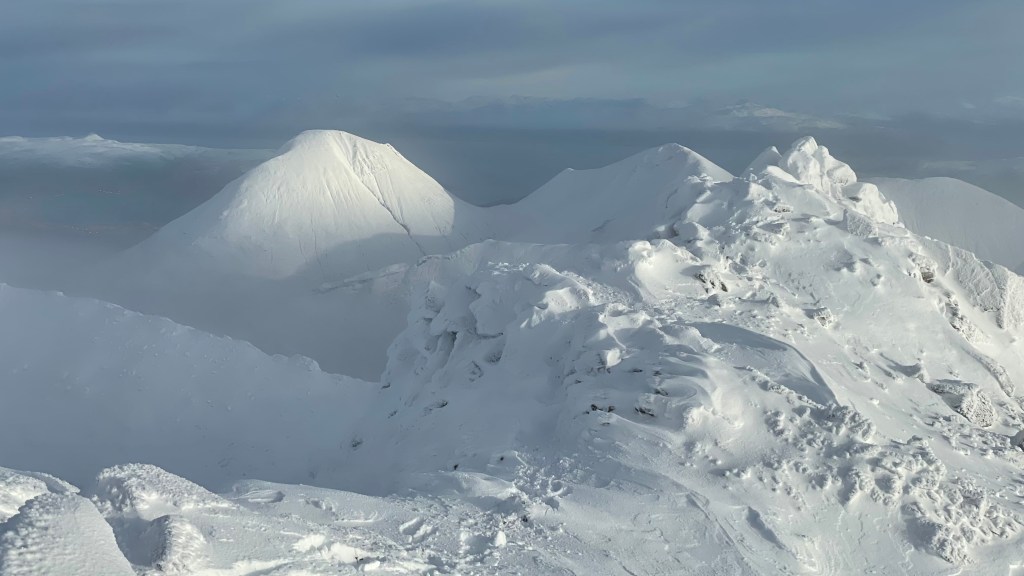
Choosing the right activity
Scottish weather is notoriously unpredictable, especially in winter. With its maritime climate, Scotland can experience everything from serene conditions to harsh, brutal weather, depending on the wind direction. This variability makes it crucial to be selective about when to tackle the summits. In certain conditions—such as winds exceeding 30 mph or high avalanche risks—it may be wiser to opt for a winter walk or a low-level run instead of a mountain run.
Preparation
In the lead-up to a winter mountain day, I’m regularly checking the weather, ground conditions, and avalanche forecasts, pinpointing where the best snow and weather can be found (anything less than a storm is a win). The route is planned, food is prepared, and my bag is packed the night before.
On this particular day, the forecast was mixed: some sunshine and precipitation, winds up to 25 mph, a freezing level at 700 meters by midday, and snow already covering the mountain tops. The weather was expected to worsen the following day, so I was aware it could come in early. My route for the day was 14km with 1,250 metres of ascent, covering two Munros.
Early start: coffee and go!
Daylight hours in the Highlands during winter are minimal, so I get up as early as possible to maximize daylight. 3 a.m. starts are not uncommon.
In the morning, I focus on the essentials: a final check of the weather and avalanche forecast, and then I’m off. As winter progresses defrosting the car becomes a ritual.
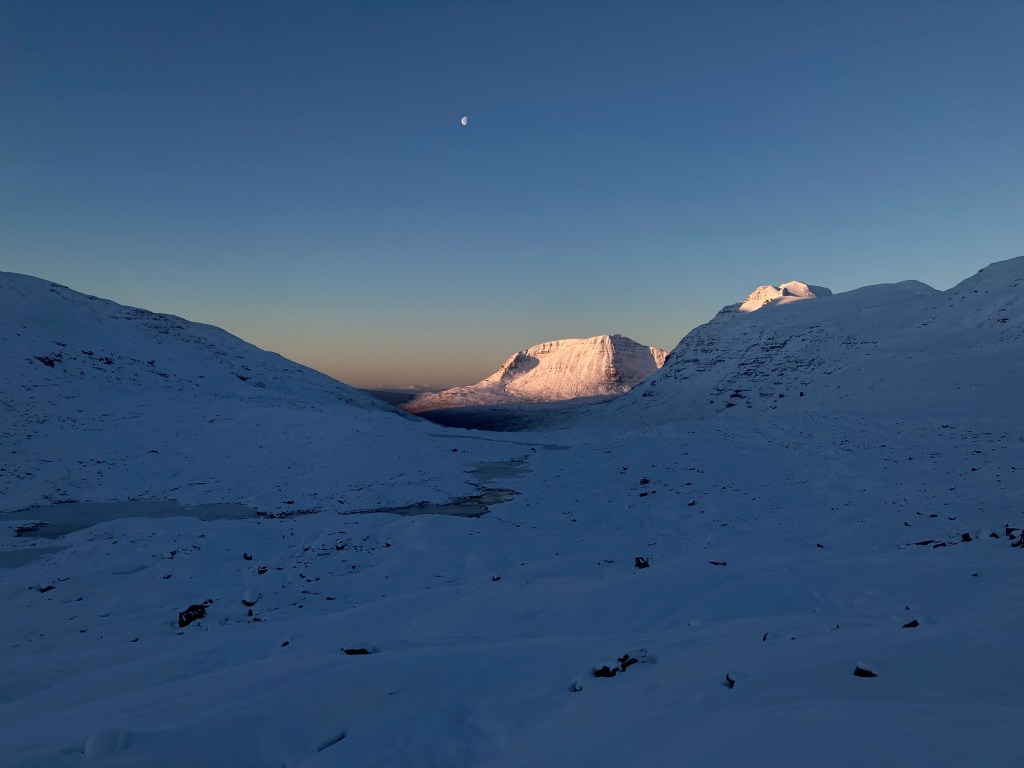
The journey begins
The drive to the start point is often the most dangerous part of the day. Road conditions, other drivers, and the possibility of deer darting across the road all need to be taken into account.
Run-in: Bog, burn, and temperature
Most winter days in Scotland require a decent run-in to reach the mountains. This initial stretch is usually below the snow line and often below the freezing level. Running through unfrozen bogs and burns in the dark, guided only by a head torch, can be challenging. The key here is to keep your feet dry—or at least warm.
Navigation
I set my watch with the route and regularly check a physical map, ensuring I’m on track and can quickly reorient myself if digital devices fail.
Uphill grind
If I feel warm at the start of the climb, I’m likely to overheat quickly, so I adjust my layers before beginning the ascent.
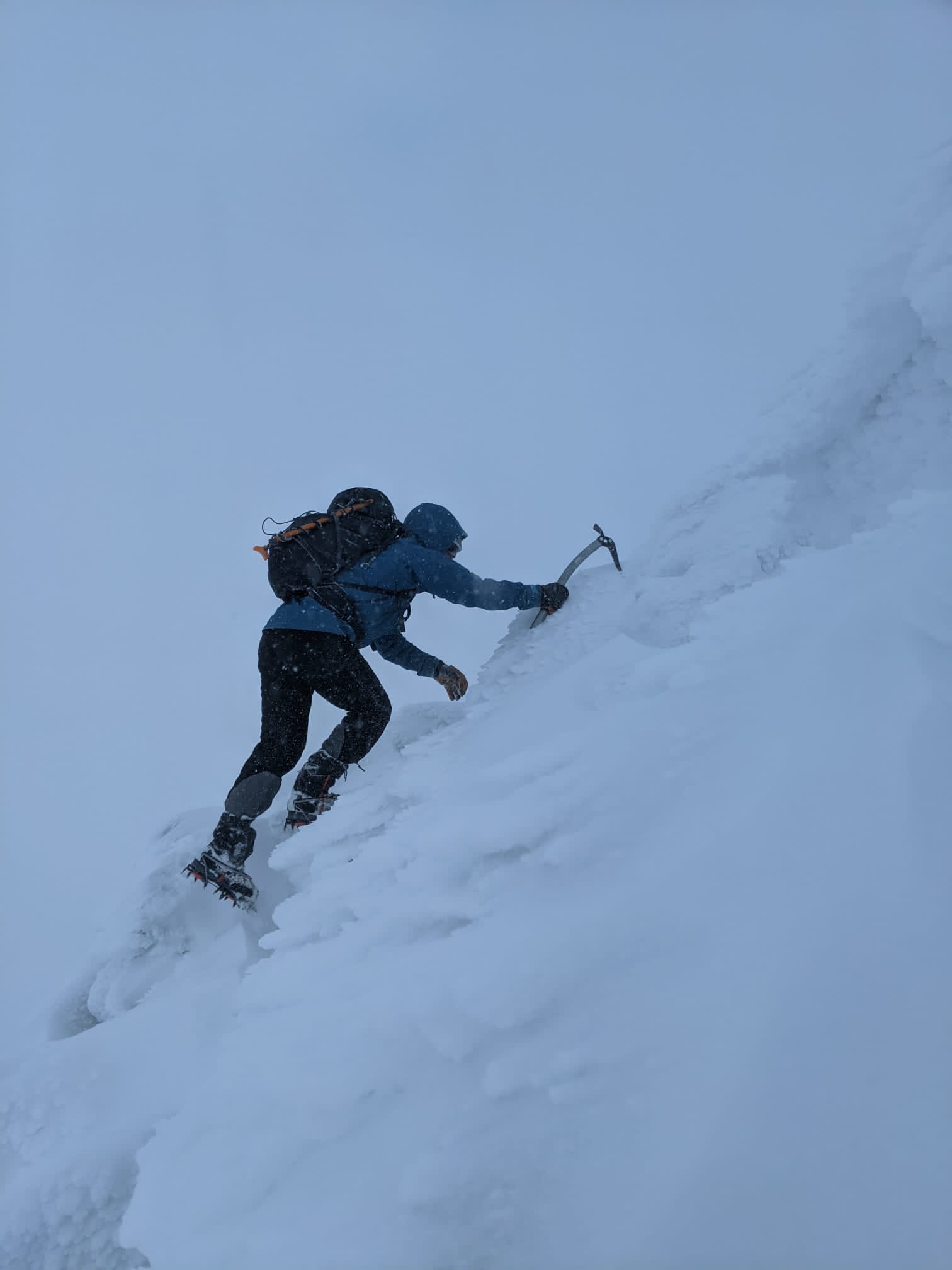
The grind begins as I move upwards. It’s always a significant moment when I first hit the snow line—sometimes right out of the car, but usually a few kilometers in and a few hundred metres above sea level.
Ground conditions: Meeting expectations?
Throughout the journey, I’m assessing whether conditions match my expectations. Is it as cold as I anticipated? Is there more snow? Can I determine the wind direction from overnight? Do snow conditions align with the avalanche forecast? Reaching the snow line offers a clear opportunity to reassess the plan.
Axe & crampons
As I climb higher, the terrain becomes more challenging, with the risk of an uncontrolled slide if I trip. This is where a mountain axe, and knowing how to use it, becomes essential.
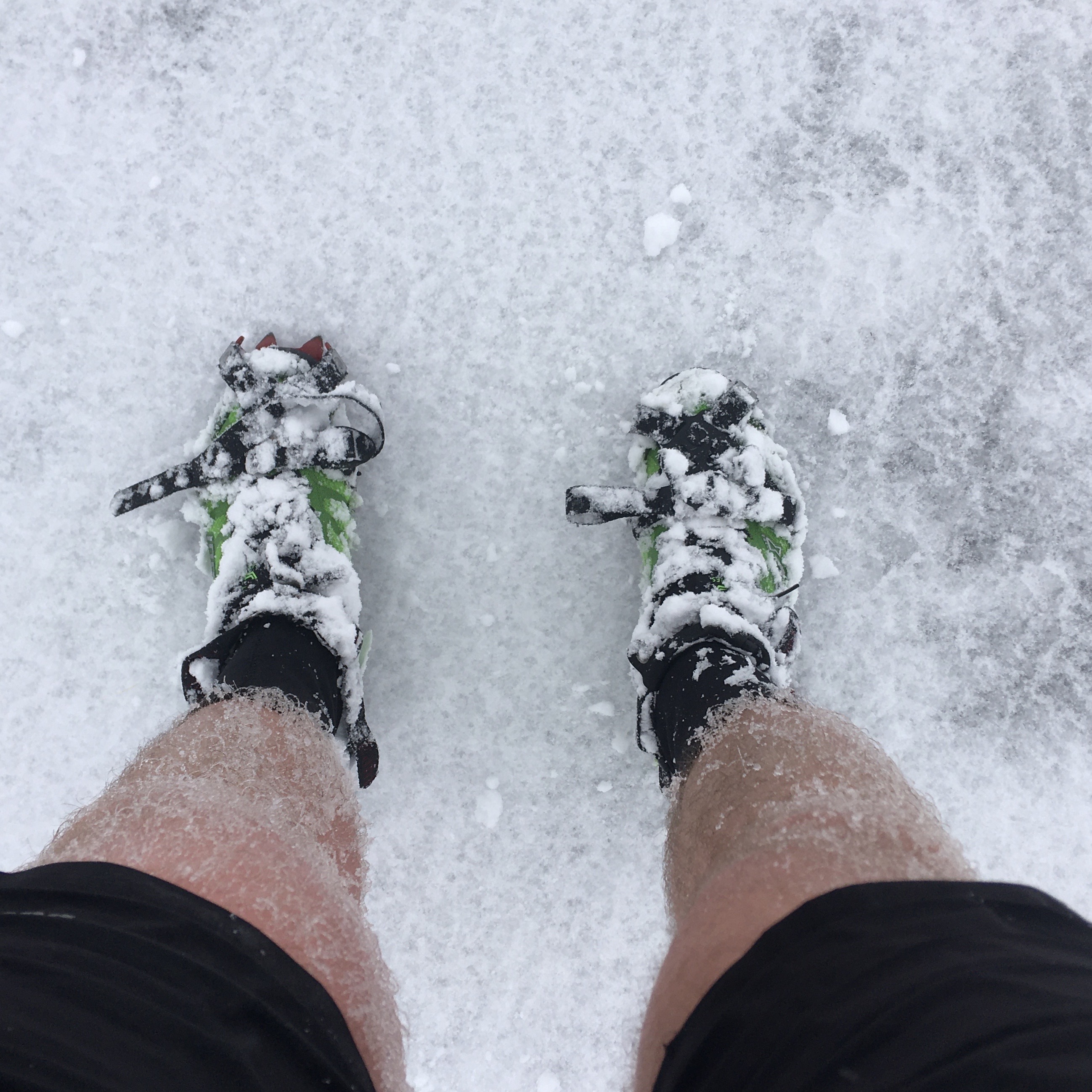
As the ground becomes icier, my fell-shoe studs become ineffective. I stop to put on a warm layer and crampons. Waterproof gloves replace my thin ones, as I’m likely to touch snow frequently now. It’s also a good time to snack.
Weather
The weather is often the defining factor of the day. I constantly adjust my layers to match the temperature, which fluctuates due to sunlight, wind, and elevation (the higher you go, the colder it gets).
If the wind picks up, I layer up. If it starts snowing hard, out come the goggles. If the weather begins to impact my enjoyment, I consider turning around; if it threatens my safety in a big way, I’m heading back down.
Poor visibility, such as in a sudden blizzard, forces me to slow down and navigate with care. Winter snow can bury key features, so I rely heavily on map contour interpretation. Knowing where cornices are likely to form, how to navigate around a corrie rim, and other techniques become crucial for staying safe.
Summits
After two and a half hours, I reach my first summit. I quickly snack, take in any view that might reveal itself, and head off to the second peak. The usual summer approach slope is an avalanche risk today, so I take a different route to the summit.
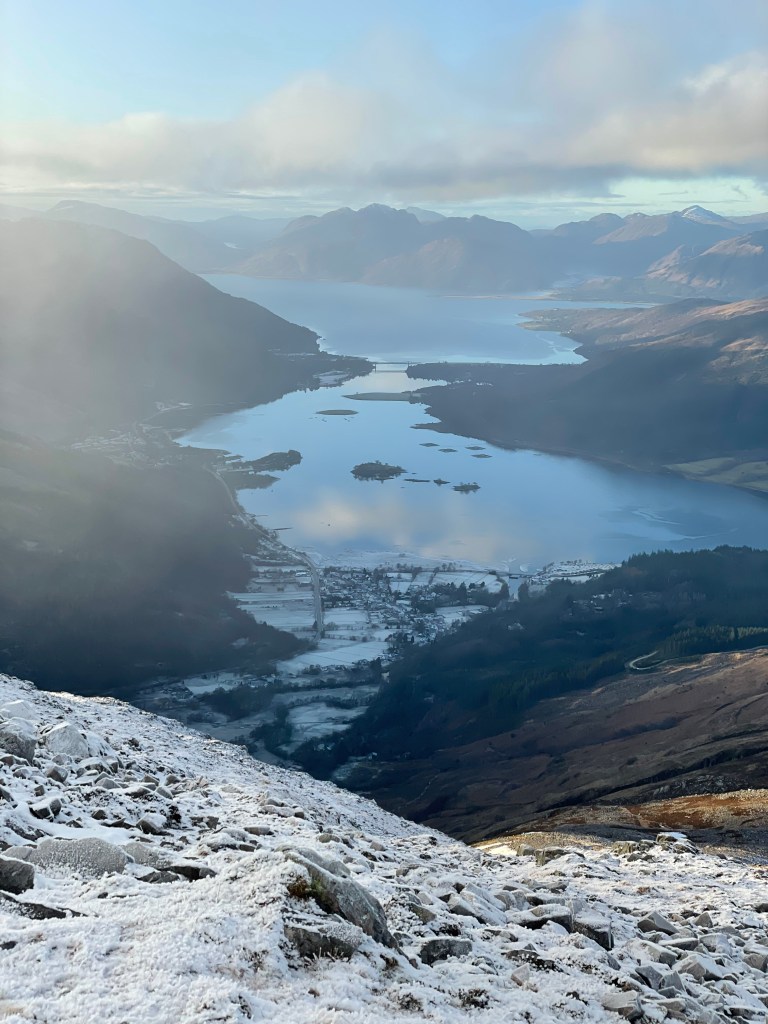
Once I’ve bagged the second peak, it’s another quick bite to eat, and then I start the descent.
The Return
Descending, I reach the snow line and stow my axe, though I keep my crampons on as the path is still icy. As I enter the woods, I remove the crampons and switch on my head torch for the final kilometer. The trail weaves through the trees, with low branches perfectly positioned to run into.
There and back again
At the car, I change into dry clothes, drink and eat. With temperatures dropping rapidly, I’m eager to start driving before the roads freeze over. A quick text home to confirm I’m safely off the hill, and I’m on my way.
A podcast keeps me company on the drive home, where I remain vigilant for reckless deer. Once home, I lay out my wet gear to dry (crampons are particularly prone to rust), shower, eat, check the weather for the next day, and if possible, prepare to do it all over again.
Winter in the Highlands? I love it.
 WinterSkills.Scot